Andrew Wakefield published a paper in The Lancet in 1998 that included 12 children claiming that the MMR vaccine was positively linked to autism. The children were all patients of the Royal Free Hospital in London, being treated for gastrointestinal and developmental issues. Data was collected utilizing the parents of the patients’ memories, and there was no control group in the study. Flaws like these, as well as ethical violations, forced the papers’ retraction as well as Wakefield’s medical license being revoked. The publication of this paper caused an uprise in vaccine hesitancy, and vaccination rates dropped, leading to outbreaks of diseases that had previously been under control.
After this study was published, many independent research groups investigated the supposed link between the MMR vaccine and autism but found no supporting evidence. The Institute of Medicine reviewed numerous large-scale epidemiological studies and concluded that there is no causal relationship between the MMR vaccine and autism. Their report emphasized that autism symptoms typically appear around the same age vaccines are administered, which may have led some parents to mistakenly associate the two. This conclusion has been reinforced by additional studies worldwide, all showing no increased autism risk among vaccinated children. Today, Wakefield’s study is widely recognized as fraudulent, and the overwhelming scientific consensus confirms that vaccines do not cause autism.
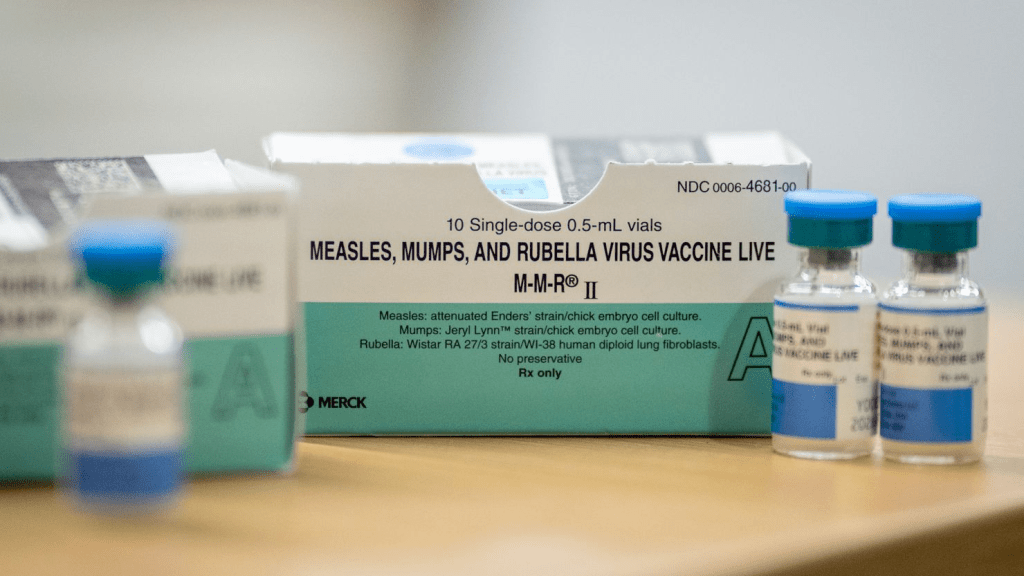
Image credited to CNN
In Denmark, the national vaccination program administered the MMR vaccine to all children at around 15 months of age. In 2002, Madsen et al analyzed data from over 537,000 children born from the years 1991-1998 to examine the relationship between MMR vaccination and autism. Children who had not received the vaccine served as the control group, and the researchers controlled for variables such as gender, birth weight, and socioeconomic background. By using comprehensive registry data, the study avoided issues like recall bias and selective sampling, which was one point of criticism of the Wakefield paper. The purpose of the research was to determine whether there was a link between receiving the MMR vaccination and the onset of autism.
Wakefield’s 1998 study, unlike Madsen et al’s study, examined only 12 children who had developmental regression and gastrointestinal issues and were all treated at the same hospital discussed earlier. Also, unlike the study above, this one relied on parents’ abilities to remember when symptoms of autism began. The study’s claim was that symptoms often appeared shortly after MMR vaccination, but the small sample and lack of control or comparison group made it impossible to establish cause and effect between autism and the MMR vaccine. The study was also limited by selection bias, as the children were not randomly chosen and were all from the same location and may share other qualities; therefore, they may not be representative of the greater population. In contrast to Madsen et al.’s large, nationwide analysis, Wakefield’s findings were unreliable and ultimately discredited by further research showing no link between the MMR vaccine and autism.
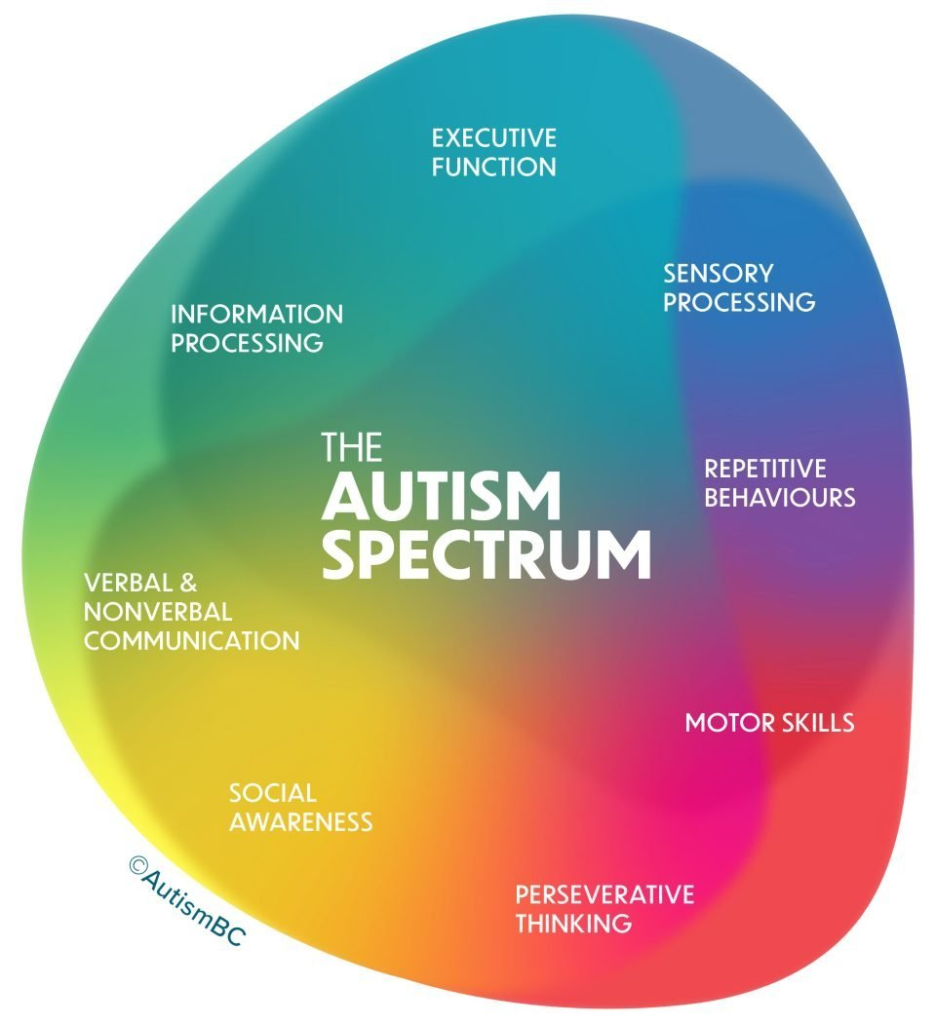
Image Created by AutismBC
Relative risk (RR) is a statistical tool used in public health and epidemiology to determine how likely an event is to occur in one group compared to another. It is calculated by dividing the rate of the outcome in the exposed group by the rate in the unexposed group. An RR of 1 indicates no difference in risk between the two groups, an RR above 1 means the exposure increases the risk, and an RR below 1 suggests a protective effect. This measurement is particularly helpful in vaccine studies or other health research to quantify whether an exposure changes the probability of a specific outcome. An understanding of RR is crucial for many roles in public health, academia, and policy-making.
The Madsen et al study used relative risk to evaluate whether the MMR vaccine contributed to autism. They reviewed health records for over half a million children born in Denmark from the same period of time as the original study, comparing autism rates between those who received the vaccine and those who did not. The study reported an RR of 0.92 with a 95% confidence interval of 0.68 to 1.24, indicating that vaccination did not increase the chance of developing autism. This shows that there were similar rates of autism among all children, whether they were vaccinated or not, refuting all claims of a cause-and-effect relationship. Overall, this retrospective study not only refutes the claims of Wakefield but also serves as proof of the safety of MMR vaccines.

 Microbiology 251 Blog