Methylmercury is an organic compound that is generated by some aquatic microorganisms. This occurs so that the organisms may convert naturally occurring mercury into a form that is useful for necessary biological processes. This new compound is stored in body tissues, where it binds with muscle proteins of aquatic animals. While this process may occur in microorganisms, these will be eaten by larger organisms that store methylmercury in their tissues as well. Eventually, this could lead to humans ingesting these animals and absorbing the methylmercury as well.
One common source of Methylmercury in humans is tuna. Different subspecies of tuna contain different amounts of this compound due to their behaviors and diets, as discussed in this paper. Light tuna, for example, are smaller fish with shorter lifespans, so they feed lower on the food chain and ingest less methylmercury. Albacore tunas are slightly larger and live a more predatory lifestyle than the light tuna, so they have higher methylmercury levels. Sushi-grade tuna are the largest, longest-lived, and most predatory among this group and therefore have the highest levels accumulated from consuming other organisms.
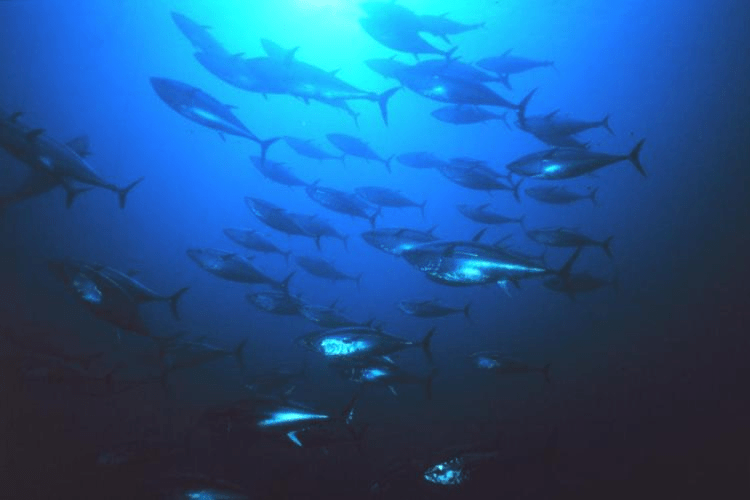
Photo of Tuna by NOAA Fisheries
As stated here, the signs and symptoms of methylmercury build-up are numbness of the fingers or limbs, impaired coordination and/or strength, vision/hearing impairment, slurred or otherwise altered speech, as well as cognitive decline. Severe and/or prolonged cases can lead to permanent developmental delays in children, as well as seizures or even death. These symptoms typically develop gradually over time. This is because Methylmercury is classified as a neurotoxin, which is specifically designed to attack the nervous system. Young and unborn children are therefore more at risk for injury since their underdeveloped nervous systems are more vulnerable to these toxins.
Because of the risk of Methylmercury in large amounts, the FDA has issued guidelines for tuna consumption. For the normal, healthy adult, the FDA recommends and serving size of about 4 ounces. However, exceptions to this recommendation exist due to increased risk for vulnerable groups. For pregnant women, only about 2 or 3 servings a week are recommended, and only 1 if they are eating albacore tuna. Pregnant women should totally avoid sushi-grade tuna. For children, the recommendation varies by age, with the youngest children (ages 1-3) only recommended to eat a 1-ounce serving twice a week. On the other end of the spectrum, college-age adults can consume up to 3 full-sized (4-ounce) servings a week.
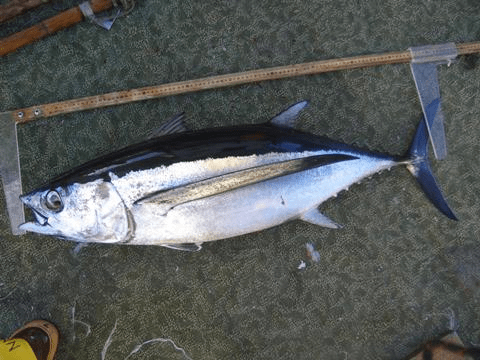
Albacore Tuna photographed by NOAA Fisheries
Thimerosal is a compound used as a preservative, popularly used in vaccines in order to prevent bacteria or fungal organisms from contaminating the compounds the vaccine is attempting to deliver. Once inside the body, it is broken down into ethylmercury and thiosalicylate. Both are circulated through the blood, and ethylmercury (which remains the longest) is eliminated from the body in a maximum of 10 days. It is an organomercury compound, and is about 50% mercury. This relates the compound back to our previous topic of methylmercury, which has been cited for its neurodegenerative effects. Some have speculated that thimerosal may be harming patients who are treated with vaccines containing this preservative.
One 2011 study found that cases of atypical autism diagnoses were “statistically significantly more likely” to have higher cumulative thimerosal exposure, which seems to support this theory. However, another article from 2011 found that epidemiologic evidence does not support the relationship between vaccines containing thimerosal and autism diagnoses. This article reviewed epidemiologic studies published between 2003 and 2008 and found that while some did show a positive relationship between the two factors, the relationship wasn’t strong enough, and it did not occur in enough studies to be a reliable trend. Overall, the consensus outside of these studies is that thimerosal is not linked to autism. While some studies over the years have found a link, there have been criticisms over their methodology.
Finally, my favorite kind of tuna is albacore. I like to eat them in a toasted sandwich with cheese. I can’t imagine that I eat more than 4 ounces a week, so I believe I am safe from methylmercury specifically. The studies indicate that you should be more cautious of mercury from tuna than vaccines, as there are more confirmed incidences with tuna, and the vaccine risk is not confirmed.

 Microbiology 251 Blog